
How to Safely Pressure Wash a Wood Deck
In This Article
The Delicate Nature of Cedar & Pine
Wood decks require a completely different approach than concrete or brick. Unlike concrete, wood is a porous and soft material. It breathes, absorbs water, and expands and contracts with the weather.
Using excessive pressure on a wood deck will cause irreversible splintering and furring (where the wood fibers tear out and stand up like a week's old beard). This destroys the natural look of the grain.
It also destroys the natural oils in the wood that keep it looking healthy. Once the fibers are torn and the surface is roughened, it becomes a magnet for dirt and moisture, leading to faster rot and decay. The wood will look gray and chalky almost immediately after a harsh washing.
Choosing the Right Pressure
More pressure does not equal cleaner. In fact, for wood, it usually means more damage. You need to treat the wood with respect.
- Softwoods (Cedar, Pine): Never exceed 500-600 PSI. Too much pressure will permanently damage the surface.
- Hardwoods (Ipe, Oak): Up to 1,200-1,500 PSI max. Hardwoods are more durable but can still be damaged by excessive force.
- The Nozzle: Use a 25-40 degree fan tip. This distributes the pressure over a wider area, reducing the risk of damage. Never use a zero-degree (red) tip on wood, as it will instantly gouge the surface.
The Golden Rules of Technique
Technique matters more than the machine settings. You can have the lowest PSI, but if you hold the wand wrong, you will ruin the deck.
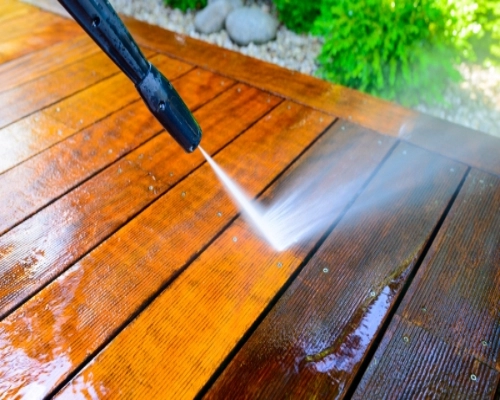
- Distance: Hold the nozzle at least 12-18 inches from the surface. Getting too close is the #1 cause of DIY damage.
- Keep Moving: Never hold the trigger down in one spot. This creates "hot spots" that will permanently etch the wood, creating dark scars.
- With the Grain: Always spray in the direction of the wood grain. Spraying against the grain lifts the fibers and causes massive splintering.
- Angle: Hold the wand at a 45-degree angle, not straight down. Spraying straight down can force water into the end grains of the boards, causing swelling and splitting.
Post-Wash Care: Sanding & Sealing
Even with perfect technique, pressure washing raises the wood grain. The wood will look fuzzy and will not accept stain evenly unless you prepare it.
If you are planning to stain or seal the deck, you cannot simply wash and dry. You need to:
- Clean: Use a detergent specifically designed for wood to remove mildew and graying.
- Strip (if needed): Instead of blasting away old stain with dangerous pressure, the correct method is to use a chemical wood stripper to dissolve the stain.
- Rinse: Follow with a gentle low-pressure rinse.
- Brighten: Apply a wood brightener to neutralize the pH and open the wood pores for restaining. This restores the natural color of the wood.
Skipping the brightener often results in a blotchy, uneven stain job.
Safety and Preparation
Before you start, clear the deck completely. Remove all furniture, potted plants, and decor.
Check for loose boards or nails. A loose board can fly off when hit by water. Hammer down any protruding nails to prevent injury and tearing of the wood.
Protect your plants! Cover delicate shrubs near the deck with plastic sheeting. The cleaning chemicals can harm them.