
The Ultimate DIY House Washing Cheat Code: Pro Ratios and Secrets
In This Article
The Core Concept: Soft Washing vs. Power Washing
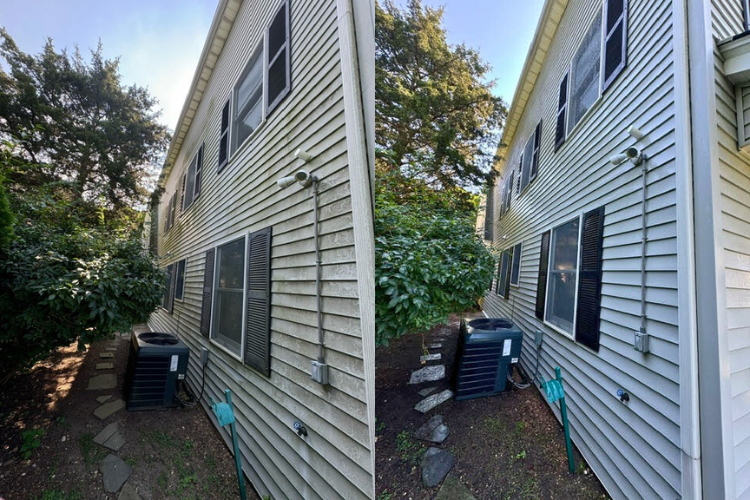
If you're reading this, you probably bought a pressure washer and are staring at your green siding. But before you pull the trigger: Stop. When most people think of exterior cleaning, they imagine blasting away dirt with a high-pressure wand. While power washing is excellent for concrete driveways, it is a catastrophic choice for your home's siding.
The core concept the pros use is called Soft Washing. It relies almost entirely on chemistry rather than physical force. You apply a specially mixed, biodegradable chemical solution using pressure similar to a standard garden hose. The solution breaks down the dirt, mold, algae, and mildew at a microscopic level, and the water simply acts as a rinse.
High pressure destroys things. It cracks vinyl, splinters wood, strips paint, and worse - forces water behind your siding panels, leading to unseen, internal mold inside your walls.
The Pro Chemistry: Exact Mix Ratios
Here is the biggest secret in the industry: Pros don't buy "House Wash Soap" from the hardware store. It's usually weak and overpriced. We mix our own chemical blend.
1. Sodium Hypochlorite (SH) - The Backbone
SH is simply liquid chlorine bleach. The active ingredient in "liquid pool shock" sold at hardware and pool stores is actually just Sodium Hypochlorite (usually at 10% or 12.5% strength). Commercial pressure washers strictly use 12.5% SH. For a standard house wash, the goal is to dilute this down to a 1% to 1.5% ratio hitting the siding.
The DIY Math: If you are using a pump-up sprayer and starting with 12.5% SH pool shock, a mix of 1 part SH to roughly 11 parts water yields a perfect 1% house wash mix. This creates a powerful chemical kill that destroys the roots of organic growth so the stains won't return immediately.
2. The "Stickiness" - Surfactants
Bleach is thin like water. If sprayed directly onto a vertical wall, it just runs down to the ground. You need a Surfactant (a specialized foaming soap). In a pinch, many DIYers use a squirt of original blue Dawn dish soap, though professional roofing surfactants (like Elemonator) are best. The soap creates a thick, sticky foam that allows the SH to cling to the siding.
3. The Dwell Time Golden Rule
This is where DIYers fail the hardest. Once you spray the chemical on the wall, leave it alone. It needs 5 to 10 minutes to chemically dissolve the algae. The green spots will literally turn light brown and vanish before your eyes.
The Equipment Hack: Downstream Injectors
You don't need a $10,000 rig, but you should avoid the tiny soap tanks built into cheap pressure washers. The ultimate DIY cheat code is a Downstream Injector. It's a $20 little brass fitting that snaps in right after your pump.
- How it works: You drop a clear hose from the injector into a 5-gallon bucket of your pure 12.5% SH. The injector automatically siphons the bleach and dilutes it at roughly a 10-to-1 ratio directly into your hose (giving you a perfect 1.25% soft wash mix hitting the wall).
- Why it's smart: This bypasses your pressure washer's pump entirely, meaning caustic bleach never touches the expensive internal components of your machine.
- J-Rods and Shooter Tips: Ditch the colored plastic tips. Buy a "J-Rod" or a "Shooter Tip". This custom nozzle allows you to gently shoot your soft wash mix 30+ feet into the air, reaching second stories while keeping both your feet safely on the ground.
The Step-by-Step "Cheat Sheet" Process
Here is exactly what you should do on Saturday morning:
- Protect the Plants (Pre-Wetting): Property damage is the hallmark of a bad DIYer. heavily soak all surrounding vegetation, grass, and bushes with fresh water. Dilution is the solution to pollution. Saturated plants won't absorb chemical runoff.
- Tape it Up: Insulate electrical outlets and secure keyholes with painter's tape to prevent short-circuits or chemical rusting. Ensure all windows are tightly closed.
- Bottom-to-Top Application: Apply your soft wash solution starting from the bottom of the house and working your way up. Why? Because if you spray from the top down, the powerful bleach will trace down over the dry, dirty siding below, leaving permanent "clean streaks" that you'll have to scrub off.
- Dwell (5-10 Minutes): Let the chemistry do the lifting. Keep it wet.
- Top-to-Bottom Rinse: Using low-pressure (switch to a wide-fan rinse nozzle), thoroughly rinse from the top down. The dead organics will cascade off like melting snow. Finally, drench all the surrounding plants with fresh water again.
Why Most DIY House Washing Fails
If you don't follow the rules above, you risk catastrophic damage to your largest asset.
- Water Intrusion: Blasting underneath the overlapping siding seams drives water behind the walls.
- Zebra Stripes: Holding a pressure wand too close leaves permanent, deep etching in vinyl, wood, and aluminum that acts like a nasty scar.
- Dead Grass: Forgetting to aggressively water the plants before and after leads to thousands of dollars in ruined landscaping.
If combining specific chemical ratios, handling liquid chlorine, and calculating GPM/PSI sounds stressful, save your weekend and call a pro. We do this every day.